
QUICK GUIDE TO ESTIMATING FABRIC YARDAGE
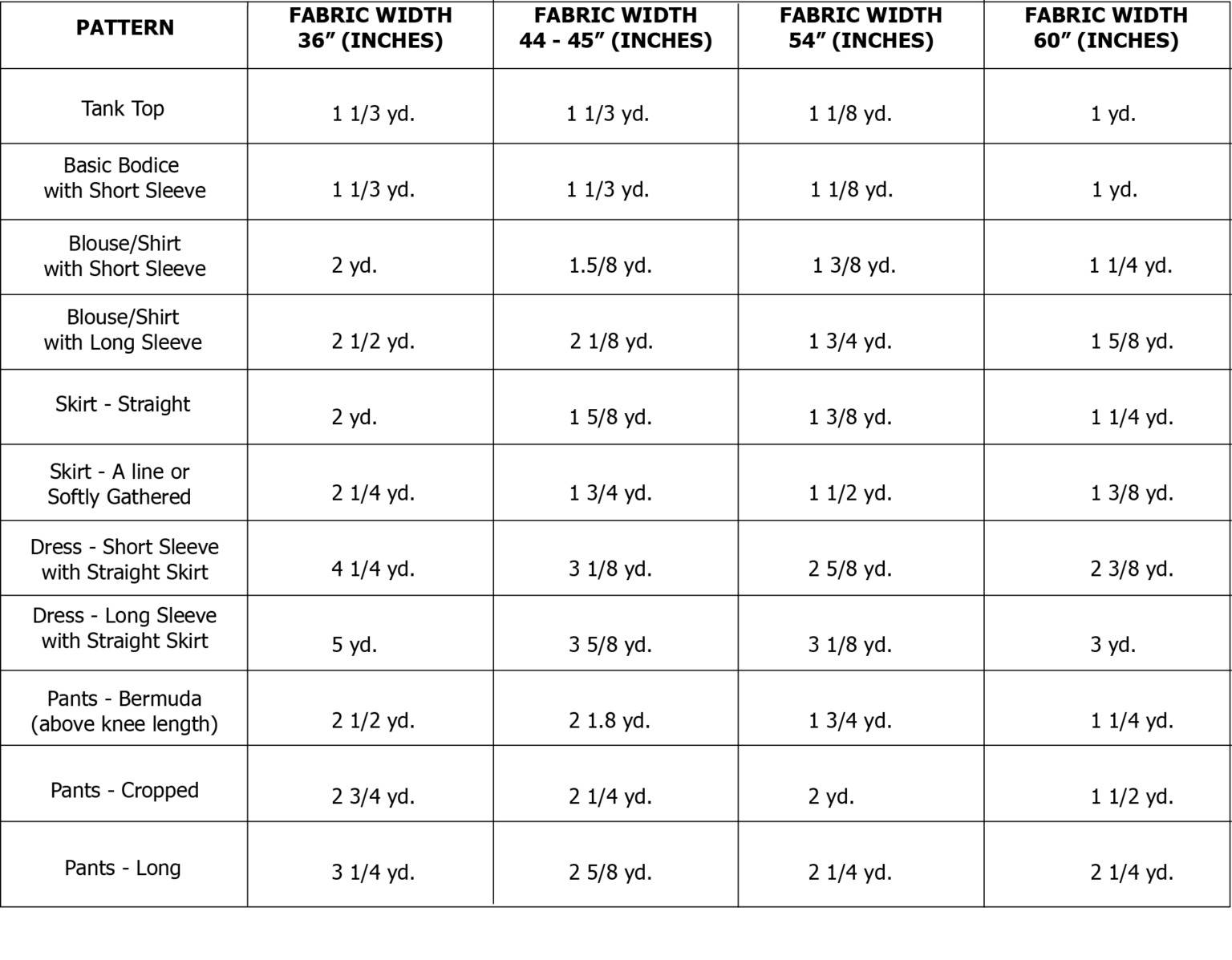
When we find ourselves in a fabric store without a project plan, it’s easy to become uncertain about how much fabric to buy. To eliminate the hassle, we have developed a handy fabric yardage guide to help you estimate the appropriate amount to purchase. Keep in mind that this estimation is based on an average person’s height of approximately 5’6″ (153 – 154 cm), and it’s crucial to consider your body’s actual circumference.
To err on the side of caution, we always suggest adding an extra 1/4 yard (.23 m) for each yard of fabric you purchase. If you’re working with plaids, include the length of 1 plaid repeat for every specified yard.
Nevertheless, we strongly advise calculating your yardage requirements before embarking on a fabric shopping trip. It’s essential to account for potential shrinkage, especially when working with 100% cotton fabric. We recommend machine washing, drying, and ironing the fabric before cutting it for your project.
The chart below provides a general guideline for estimating the amount of fabric you might need for a specific garment intended for an average-sized individual.
Quick guide to estimating fabric yardage
FABRIC CONVERSION CHART
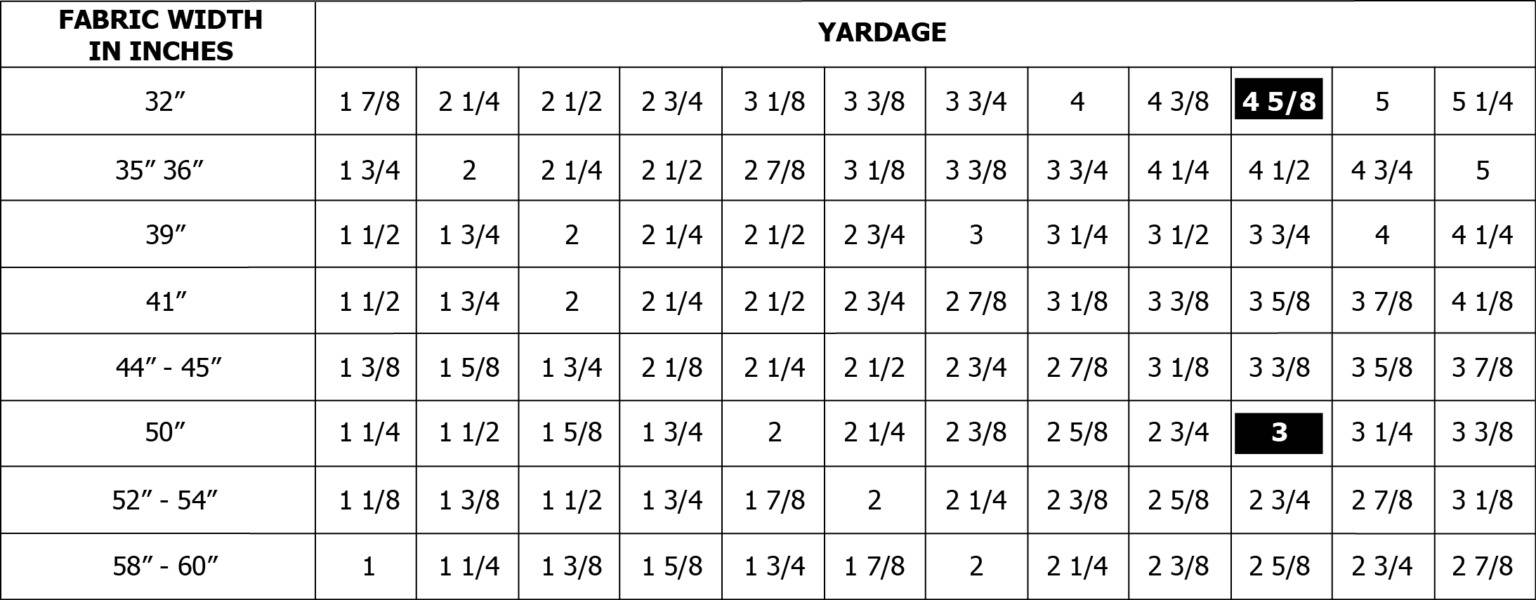
We make every effort to provide the necessary fabric yardage for each pattern, but it can be challenging to determine the exact amount needed due to variations in pattern sizes and the availability of fabrics in different widths. To save time and money, it is advisable to check the fabric yardage before you go fabric shopping. However, if the pattern specifies a fabric width of 54 inches and the fabric you desire is only 39 inches wide, what steps can you take to address this discrepancy
In such situations, you can refer to the chart provided below to determine the equivalent amount of fabric needed for a different width. For example, let’s assume the garment you intend to make requires 3 yards of 50-inch wide fabric, but the fabric you have is only 32 inches wide. In this case, you would need to purchase 4 5/8 yards of 32-inch wide fabric. To find the required yardage based on your available fabric width, simply refer to the chart below.
Please keep in mind that the numbers provided in the chart serve as a guideline and it’s always advisable to err on the side of caution by purchasing an extra 1/4 yard. Additionally, make sure to carefully check the pattern pieces when altering the fabric width.
Fabric conversion Chart
How to check the fabric yardage required
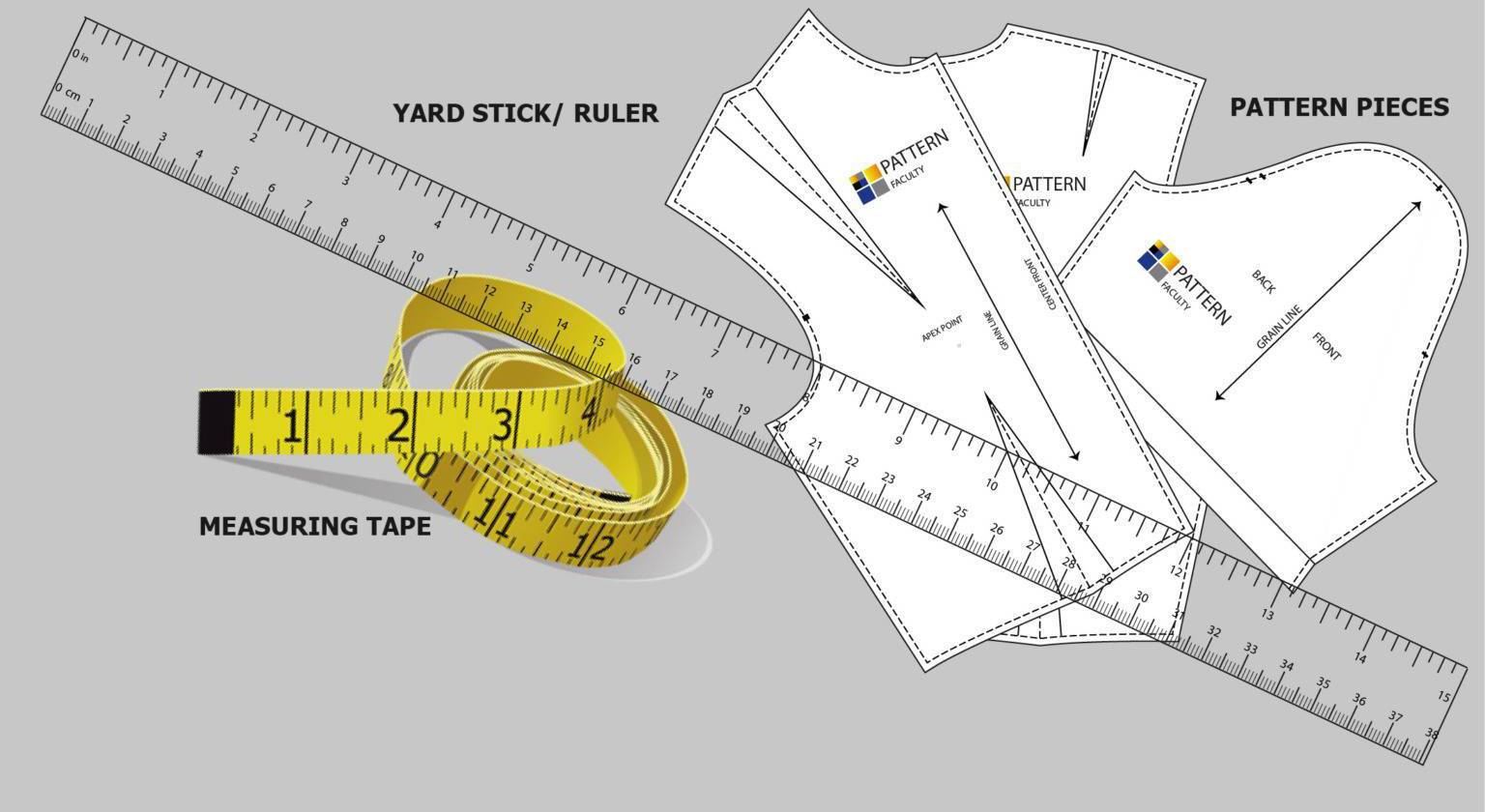
Required material:
- Pattern sheet please detach all the pattern pieces from the pattern sheet. Ensure that each pattern piece has seam allowance added all around, and also cut out any required facings.
- Yard stick
- Measuring tape
- Brown paper
Lets assume we are working with 36 wide fabric. Place a sheet of brown paper on a table, forming a rectangular surface of 18 width away from you and about 35 – 38 length to your right. Utilizing the bottom corner as the folded edge, arrange your pattern pieces on the brown paper surface leaving 1 for the selvedge while ensuring they are aligned with the grain line. Its advisable to subtract an inch from the width of the fabric to allow for the selvedge. Therefore, when purchasing 36 wide fabric, you should arrange your patterns within a 17 width to determine the required yardage accurately (36 wide folded into two then minus 1 for selvage = 17). Refer to the picture below.
Once you have confirmed that your layout fits within the desired width and that all pieces are aligned with the grain line, measure the distance from the lower ruler, starting from the left and moving to the right. This measurement represents the amount of fabric you need to purchase. If you know the width of the fabric you are going to purchase, it will help you to find the yardage much easier.
Pattern Layout on Fabric (Example)
As we are working with a front open blouse pattern, we will be positioning the back panel on the fold. If you happen to have a back opening blouse, ensure that you position the front piece on the fold. Please note that certain pieces may require just a single piece. Refer to the example of pattern layout on fabric provided below:
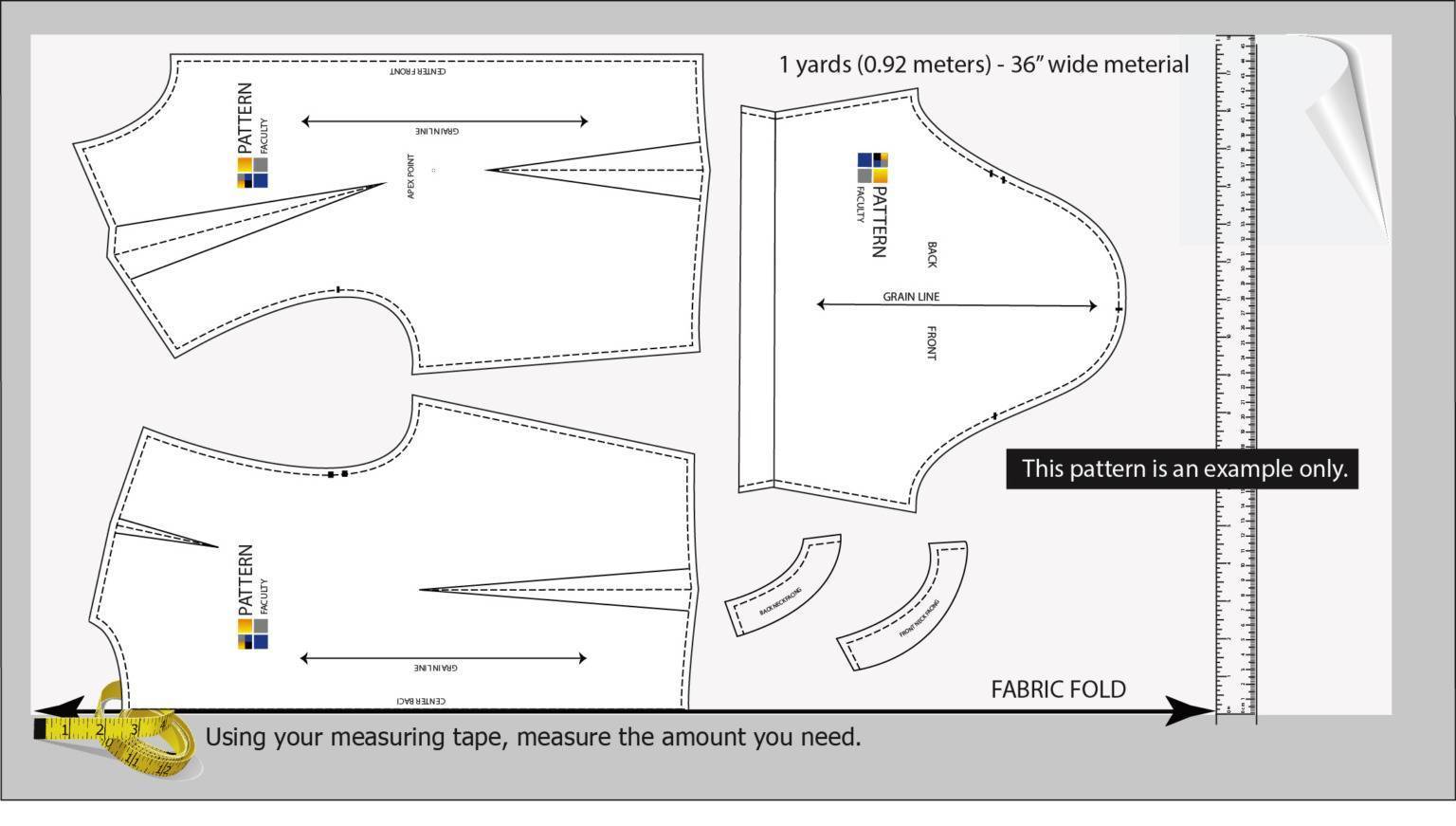
This is an example only (basic bodice pattern) above illustrations are not to scale
Happy Sewing!