

Seam allowance plays a critical role in sewing by encompassing the additional fabric along the edges of a pattern piece. Its primary purpose is to facilitate the construction of seams, ensuring the creation of a durable and well-fitted final garment or project. By providing sufficient seam allowances throughout the garment, it allows for flexibility in making fitting adjustments during the construction process. This enables modifications such as taking in or letting out seams as necessary, ultimately achieving the perfect fit.
Moreover, seam allowances contribute to the strength and stability of the seams. The extra fabric around the block helps distribute stress evenly, preventing the seams from ripping or fraying and enhancing the longevity of the finished piece. Additionally, seam allowances create space for various finishing techniques. They provide room for seam finishes, hemming, and the addition of trims or embellishments, allowing for the desired aesthetic and personalized touches to be incorporated.
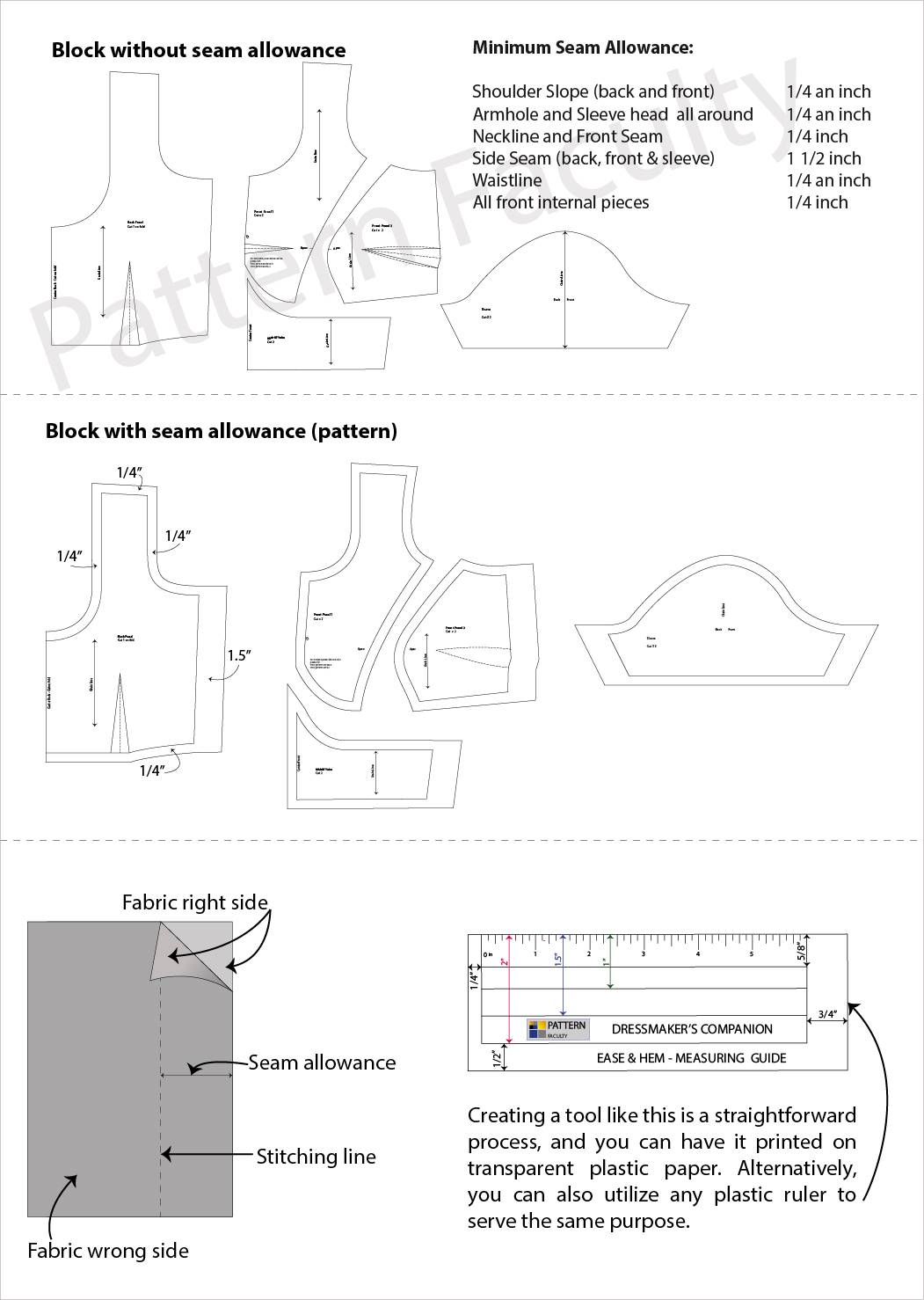
Width of a Seam allowances come in different sizes, and the appropriate width depends on various factors such as the type of project, sewing technique, and personal preference. When working with fine fabrics or intricate designs, it is common to use narrower seam allowances. This helps to reduce bulk and make the sewing process easier. The commonly used widths for such projects range from 1/4 inch (0.64 cm) to 5/8 inch (1.6 cm). However, it’s important to note that some patterns may provide specific instructions regarding seam allowance measurements, which should be followed accordingly.
On the other hand, there are situations where wider seam allowances are required. These wider allowances provide extra room for alterations or adjustments to be made later on. In such cases, wide seam allowances ranging from 1 inch (2.5 cm) to 2 inches (5 cm) or even more may be appropriate. Ultimately, the choice of seam allowance width depends on the specific project requirements and individual preferences. Side seams often benefit from wider seam allowances.
The stitching line marks the starting point for providing seam allowance outward. It plays a vital role as the precise path for the sewing process. Accurate tracing of all stitching lines is essential to ensure the correct assembly of your garments. When cutting, be sure to follow the cutting line, which represents the outermost boundary of the pattern piece, extending beyond the stitching line. This line defines the final shape of the fabric once it is cut for sewing purposes.
How to give sewing allowance
Prior to starting your project, it’s important to determine the seam allowances you plan to use. While some commercial patterns utilize a consistent seam allowance for all seams, it is recommended to tailor the allowance for each specific seam. This practice will result in a cleaner and more refined final outcome, enhancing the professional appearance of your work. You have the option to follow the suggested seam allowance shown in the accompanying image below or choose your own preference when working on various garments, including saree blouses with deep necklines, high necklines, or any other design.
Happy Sewing!